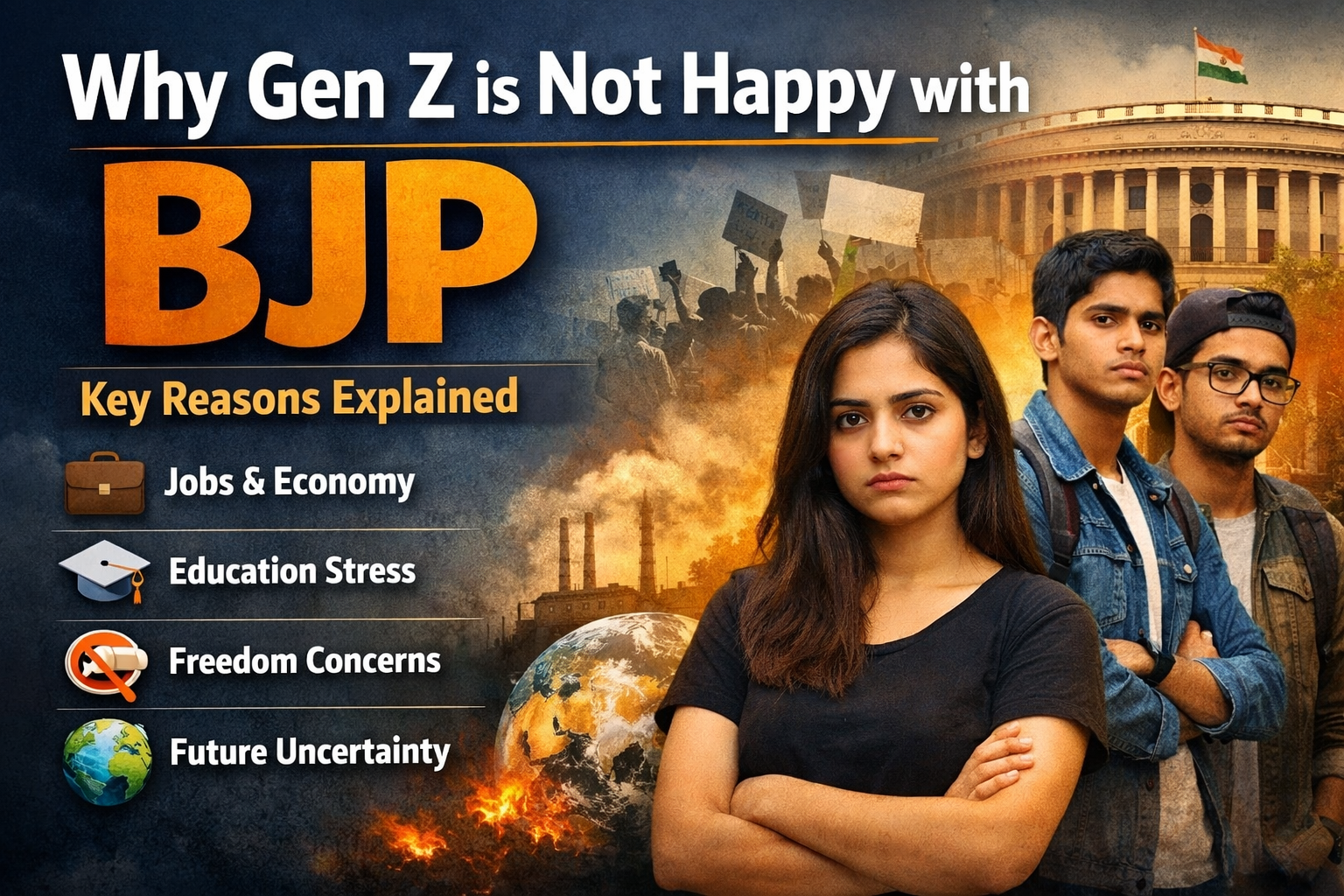
Why Gen Z Is Not Happy with BJP: Key Reasons Explained
Claim Being Reviewed
"Concerns about jobs are valid, as youth unemployment has been highlighted in multiple surveys and reports. At the same time, the government emphasizes economic growth, startup expansion, and infrastructure development as areas creating opportunities. Issues in the education system, such as exam leaks and intense competition, have been reported in various instances. However, reforms like the National Education Policy (NEP) 2020 have been introduced to address structural challenges, though their long-term impact is still evolving. Freedom of expression remains a debated topic. While some individuals report online backlash or pressure when expressing criticism, India continues to have a diverse media landscape and active social media platforms where multiple viewpoints are shared. Perceptions around social and political issues, including polarization, are subjective and depend on personal beliefs, media exposure, and regional context. Different groups interpret these issues in different ways. Climate change concerns among Gen Z are well-founded, as it is a global issue. India has taken steps such as promoting renewable energy and international climate commitments, but many young people expect faster and more visible action."
Why Many Gen Z Voters Feel Discontent with the BJP
In recent years, a noticeable section of India’s younger population—commonly referred to as Gen Z—has shown signs of dissatisfaction with the Bharatiya Janata Party (BJP). While this sentiment is not universal and varies across regions, several factors help explain why some Gen Z individuals feel disconnected or unhappy with the party.
1. Employment and Economic Concerns
One of the biggest issues for Gen Z is job security and employment opportunities. Many young people entering the workforce feel that job creation has not kept pace with expectations. Competition for government jobs is extremely high, and private sector opportunities often feel unstable or underpaid.
2. Education System Pressure
Gen Z in India faces intense academic pressure, from competitive exams to limited seats in top institutions. Issues such as exam paper leaks, delays, high coaching costs, and lack of skill-based education contribute to growing dissatisfaction among students.
3. Digital Awareness and Critical Thinking
Gen Z is highly digitally connected and exposed to multiple viewpoints through social media. This leads to more questioning of authority and comparison with global standards, making them more critical of political narratives.
4. Freedom of Expression Concerns
Some Gen Z individuals feel that criticism of the government is sometimes discouraged and that online expression can lead to backlash or trolling. As a generation that values individual voice, this can create dissatisfaction.
5. Social and Cultural Issues
Gen Z tends to be more progressive and inclusive in outlook. Topics like religious harmony, minority rights, gender equality, and LGBTQ+ acceptance influence their perception of political parties.
6. Climate Change and Future Anxiety
Climate change is a major concern for Gen Z. They expect stronger environmental policies, action on pollution, and long-term sustainability planning. Lack of visible action can impact their trust in leadership.
7. Aspirations vs Reality Gap
Growing up in a globalized and digital world, Gen Z has high expectations for lifestyle, innovation, and opportunities. When progress feels slow or uneven, frustration increases.
Conclusion
The relationship between Gen Z and the BJP is complex and evolving. While some young voters support the party, others feel disconnected due to various social, economic, and political factors. Addressing these concerns will be key for any political party aiming to connect with the next generation of voters.
Frequently Asked Questions (FAQs)
Is Gen Z completely against BJP?
No, Gen Z is not a uniform group. While some are critical, many young voters support BJP for its leadership, development projects, and national policies.
What is the main concern of Gen Z voters?
The biggest concerns include job opportunities, education pressure, cost of living, and future security.
Does social media influence Gen Z political views?
Yes, social media plays a major role by exposing Gen Z to diverse opinions, global comparisons, and political discussions.
Are these concerns only about BJP?
No, many of these concerns apply to broader governance and political systems, not just one party.