World War 3 2026 Update: Global Tensions Rising Across Ukraine, Middle East and Asia
Claim Being Reviewed
"There is currently no official confirmation of World War 3 in 2026. While several global conflicts are ongoing and tensions are high, no direct large-scale war between major global powers has started. Experts and global organizations indicate that the situation is serious but still under control, with diplomacy and deterrence playing key roles in preventing escalation."
Could World War 3 Happen in 2026? Global Flashpoints and Rising Risks Explained
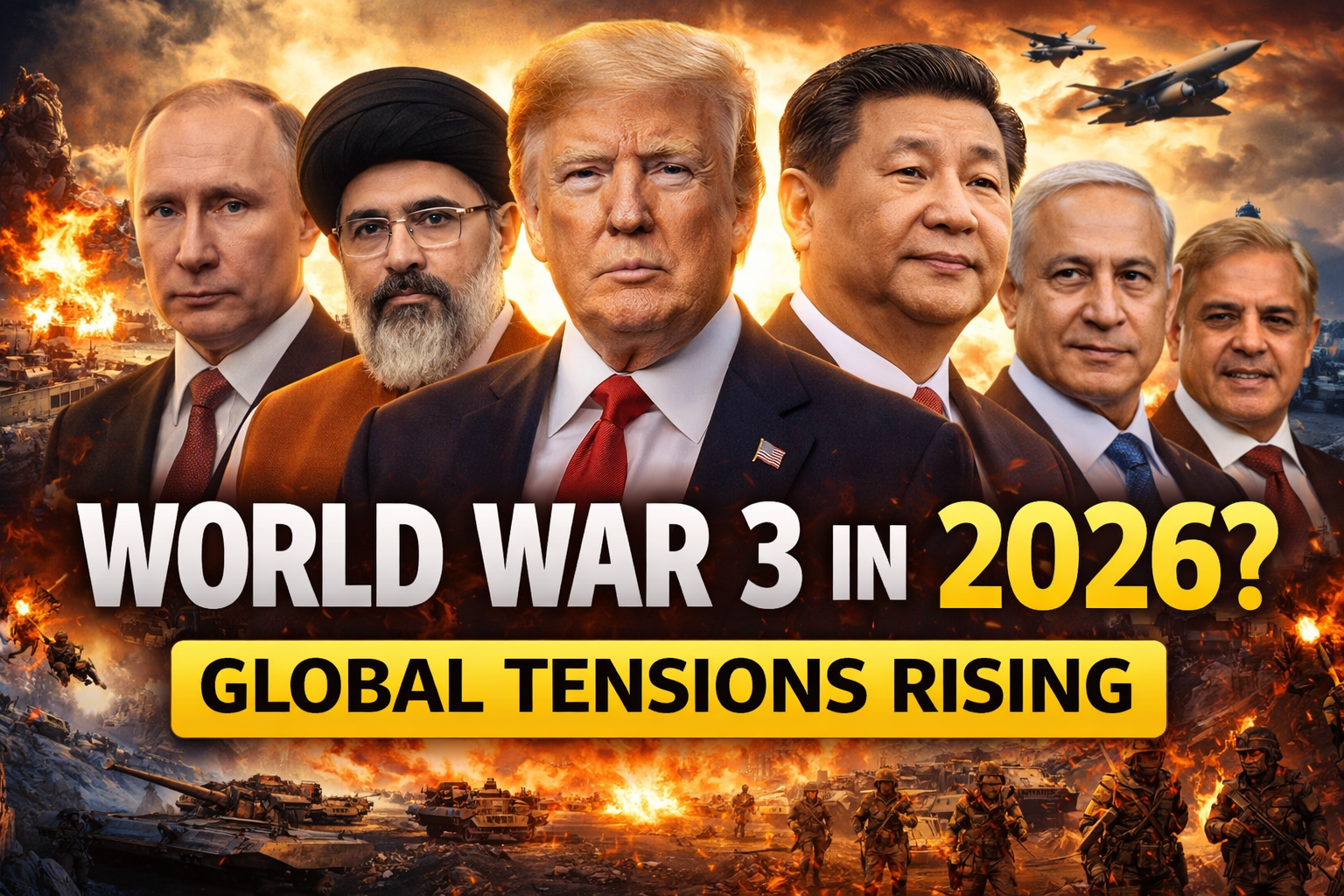
As 2026 unfolds, global tensions are rising across multiple regions, raising concerns about whether the world is moving toward another major conflict. Ongoing wars, political instability, and growing rivalry between powerful nations have made many people question: could World War 3 happen in 2026?
While no global war has officially begun, the current situation reflects a highly fragile international system. Experts suggest that the risk today lies not in a planned world war, but in miscalculations, sudden escalations, and interconnected crises that could spiral out of control.
Major Global Flashpoints in 2026
Several regions around the world are experiencing serious conflicts that contribute to rising global tensions in 2026. These flashpoints involve major powers directly or indirectly, increasing the chances of escalation.
Europe: Russia–Ukraine War and NATO Risk
The Russia-Ukraine war continues to be one of the most critical global conflicts. Now a prolonged war, it has created deep divisions between Russia and Western nations. NATO countries are supporting Ukraine, while Russia continues its military operations.
The biggest concern is that any direct conflict between Russia and NATO could trigger a large-scale war. Cyberattacks, infrastructure sabotage, and military incidents near NATO borders are increasing the risk.
Middle East: Israel, Gaza, and Iran Tensions
The Middle East remains one of the most unstable regions in 2026. The conflict in Gaza continues, while tensions between Israel and Iran are rising. Proxy groups and regional conflicts are further complicating the situation.
The Strait of Hormuz, a critical global oil route, remains a major risk point. Any disruption could lead to international military involvement and economic shocks worldwide.
Asia-Pacific: China, Taiwan, and North Korea
The Taiwan issue is considered one of the most dangerous flashpoints globally. China is increasing pressure on Taiwan, while the United States continues to support Taiwan’s defense.
At the same time, North Korea continues missile testing and nuclear threats. Even a limited conflict in this region could quickly escalate into a larger international confrontation.
Other Global Conflict Zones
Beyond major power conflicts, several regions are facing instability, including Sudan, the Sahel region in Africa, and tensions between India and Pakistan. These conflicts increase global pressure and contribute to uncertainty.
Why the Risk Feels Higher in 2026
Multiple factors are making the global situation more dangerous:
• Growing rivalry between major powers like the United States, China, and Russia
• Weakening international agreements and nuclear treaties
• Rise of cyber warfare and AI-based threats
• Economic conflicts through sanctions and trade wars
• Political instability in many countries
Why World War 3 Is Still Not Inevitable
Despite rising tensions, several strong factors are preventing a global war. Nuclear deterrence plays a key role, as countries understand that a direct conflict could lead to massive destruction.
Economic interdependence is another important factor. Countries rely on global trade, making war costly for everyone. Additionally, diplomatic efforts and back-channel negotiations continue to reduce the risk of escalation.
Expert Predictions for 2026
Experts have mixed views on the likelihood of World War 3. Some estimate a 30–50 percent chance of major escalation, but not necessarily a full global war. Most believe conflicts will remain regional or proxy-based.
History shows that global wars often begin unexpectedly. The biggest risk is not a planned war, but a miscalculation or chain reaction between multiple conflicts.
Final Conclusion
As of March 2026, World War 3 has not started. However, global tensions are higher than usual, and the risk of escalation exists. The world is currently in a fragile state where decisions made by global leaders will determine the future.
World War 3 is possible, but not inevitable. Careful diplomacy, strategic restraint, and international cooperation are key to preventing a global conflict.
Frequently Asked Questions (FAQs)
Is World War 3 happening in 2026?
No, World War 3 has not started in 2026. However, global tensions are higher than usual.
What are the main causes of World War 3 risk?
The main causes include the Russia-Ukraine war, Middle East conflicts, US-China tensions, and global political instability.
Which region is most dangerous right now?
The Russia-Ukraine war and Taiwan-China tensions are considered the most dangerous flashpoints.
Can World War 3 still be avoided?
Yes, strong diplomatic efforts, economic interdependence, and nuclear deterrence make a global war avoidable.