Mexico Drug Cartel Leader El Mencho Killed: Impact on Mexico’s Security, Violence, and Global Drug Trade
Claim Being Reviewed
"International news reports, social media discussions, and breaking news coverage following Mexican security operations."
Mexico Drug Cartel Leader ‘El Mencho’ Killed: What His Death Means for Mexico’s Security, Violence, and Global Drug Trade
Introduction
Mexico has once again entered a period of uncertainty after the death of one of the world’s most powerful drug lords, Nemesio Rubén Oseguera Cervantes, widely known as “El Mencho.” The leader of the Jalisco New Generation Cartel (CJNG) was killed during a major military operation, marking one of the biggest victories for Mexican security forces in more than a decade.
However, instead of bringing immediate peace, his death has triggered fresh violence, political debate, and fears about the future stability of Mexico. Experts warn that eliminating a cartel leader does not always end organized crime — in many cases, it creates power struggles that can worsen violence.
This article explains who El Mencho was, how he died, why cartel violence continues in Mexico, and what this event means for the country and the world.
Background: Mexico’s Long War Against Drug Cartels
Mexico has battled powerful drug cartels for over two decades. These criminal organizations control drug trafficking routes supplying illegal narcotics to North America and other regions.
The Jalisco New Generation Cartel (CJNG) emerged as one of the most aggressive criminal groups, known for military-style weapons, organized operations, and rapid territorial expansion. Under El Mencho’s leadership, the cartel became one of the most feared organizations globally.
Authorities considered him among the most wanted criminals, with international pressure mounting on Mexico to dismantle cartel leadership networks. Over the years, attempts to capture him failed multiple times due to strong protection networks and intelligence leaks.
What Happened: The Operation That Led to El Mencho’s Death
According to official reports, Mexican military forces launched a targeted operation after locating El Mencho through intelligence cooperation and surveillance efforts. He was wounded during clashes with security forces and later died while being transported for treatment.
The operation represented a major strategic success for the government, as the CJNG leader had evaded capture for years. Authorities reportedly tracked his location with the help of intelligence support linked to international partners.
Key developments after the operation included:
• Military raids across cartel-controlled regions
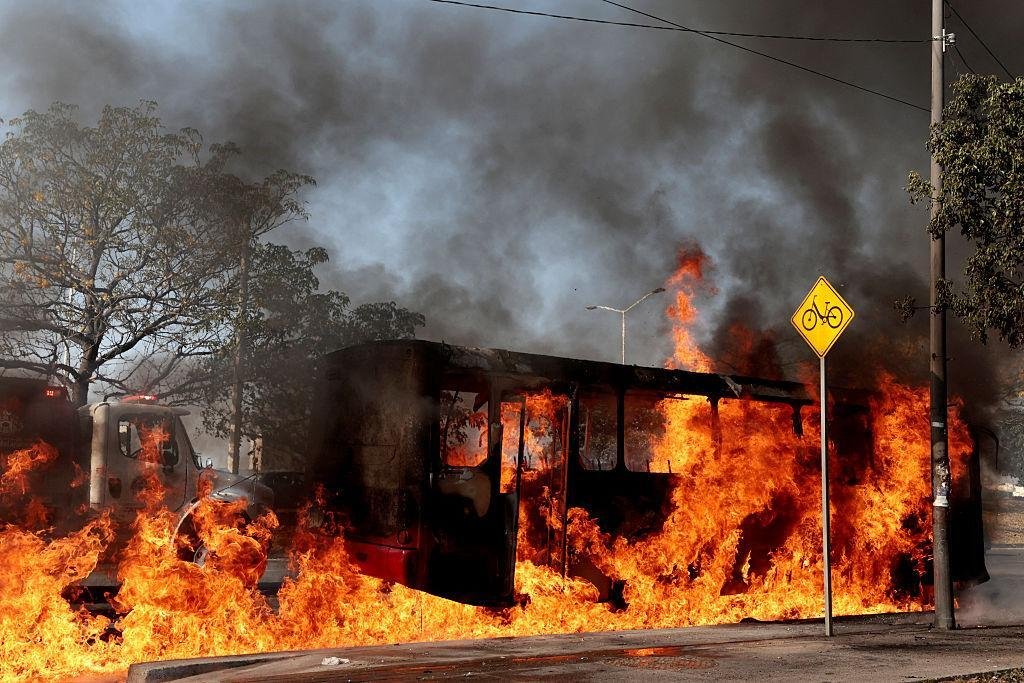
• Road blockades and arson attacks by cartel members
• Armed clashes in several Mexican states
• Increased security deployment nationwide
Violence spread quickly as cartel factions reacted to the loss of leadership.
Immediate Aftermath: Violence Across Mexico
Following the announcement of El Mencho’s death, retaliatory attacks erupted in multiple regions, including Jalisco and Michoacán. Security forces reported attacks on infrastructure and confrontations between cartel members and authorities.
Analysts note that such reactions are common after high-profile cartel killings. Criminal organizations often attempt to demonstrate strength to maintain control and prevent rivals from taking territory.
Images from affected areas showed burned vehicles, damaged businesses, and increased military patrols — highlighting how deeply organized crime influences daily life in parts of Mexico.
Why This Event Matters: A Turning Point or Beginning of Chaos?
The death of a cartel leader may appear to be a decisive victory, but history suggests a more complex reality.
Security experts argue that removing a powerful leader can create three possible outcomes:
• Cartel Fragmentation – internal fights for leadership
• Rise of Smaller Violent Groups
• Temporary increase in violence
Research shows that cartel structures often survive leadership losses because recruitment continues rapidly, allowing organizations to rebuild quickly.
Therefore, while the operation demonstrates improved military capability, it does not automatically eliminate organized crime.
Expert Analysis: Why Cartel Violence Persists
Experts believe Mexico faces a structural challenge rather than a leadership problem.
1. Economic Inequality and Recruitment
Cartels recruit thousands of young people each year, offering income opportunities unavailable in many regions.
2. Geographic Advantage
Mexico’s proximity to the United States — the world’s largest illegal drug market — makes trafficking extremely profitable.
3. Fragmentation Effect
When major leaders are killed, rival factions compete violently for control, often increasing homicide rates temporarily.
Analysts warn that past strategies focusing only on eliminating leaders have sometimes intensified violence instead of reducing it.
Political and International Impact
The killing has also sparked political debate. Mexican authorities emphasize that the operation shows progress in combating organized crime, while critics question whether long-term stability will improve.
The situation has even raised concerns about international events, including preparations for the 2026 FIFA World Cup, though officials insist visitor safety remains assured.
Globally, the event highlights how drug trafficking networks influence migration, border security, and international relations.
What Happens Next for Mexico?
Security analysts believe the next months will be critical.
• A new CJNG leader consolidates power
• Rival cartels attempt territorial expansion
• Increased military operations nationwide
• Short-term violence followed by stabilization
Some experts describe this moment as a “fragile transition,” where Mexico’s security future depends on whether institutional reforms accompany enforcement actions.
Conclusion
The death of El Mencho marks one of the most significant moments in Mexico’s fight against organized crime in recent years. While it represents a major symbolic victory for the government, it also exposes deeper challenges that cannot be solved through military action alone.
Mexico now faces a critical test: whether this event leads to long-term stability or triggers another cycle of cartel violence. The coming months will determine whether the country moves toward stronger security or renewed instability.
Frequently Asked Questions (FAQ)
Q1. Who was El Mencho?
El Mencho was the leader of the Jalisco New Generation Cartel, one of Mexico’s most powerful drug trafficking organizations.
Q2. How did he die?
He was killed during a Mexican military operation after being located through intelligence tracking.
Q3. Did violence increase after his death?
Yes, retaliatory attacks and clashes were reported in several regions following the operation.
Q4. Will cartel violence end now?
Experts say violence may temporarily increase due to power struggles within criminal groups.
Q5. Why are cartels still strong in Mexico?
Economic factors, recruitment networks, and global drug demand continue to sustain organized crime.