Iran Protests in Srinagar and Across India: Rising Tensions After the Iran Crisis
Claim Being Reviewed
"Claim: Large protests occurred in Srinagar and other Indian cities following the Iran crisis. Status: Based on multiple media reports and on-ground coverage, demonstrations and mourning gatherings were reported in parts of Jammu and Kashmir and other Indian cities. Context: Protests reportedly included mourning processions and political slogans. Authorities implemented security measures including restrictions in certain areas. Social media amplified visuals, though some unverified content also circulated. Conclusion: The protests were primarily described as mourning gatherings that, in some areas, escalated into political demonstrations. Official statements and independent media coverage confirm heightened security and preventive actions in affected regions."
Srinagar — A Rising Wave of Protests After the Iran Crisis
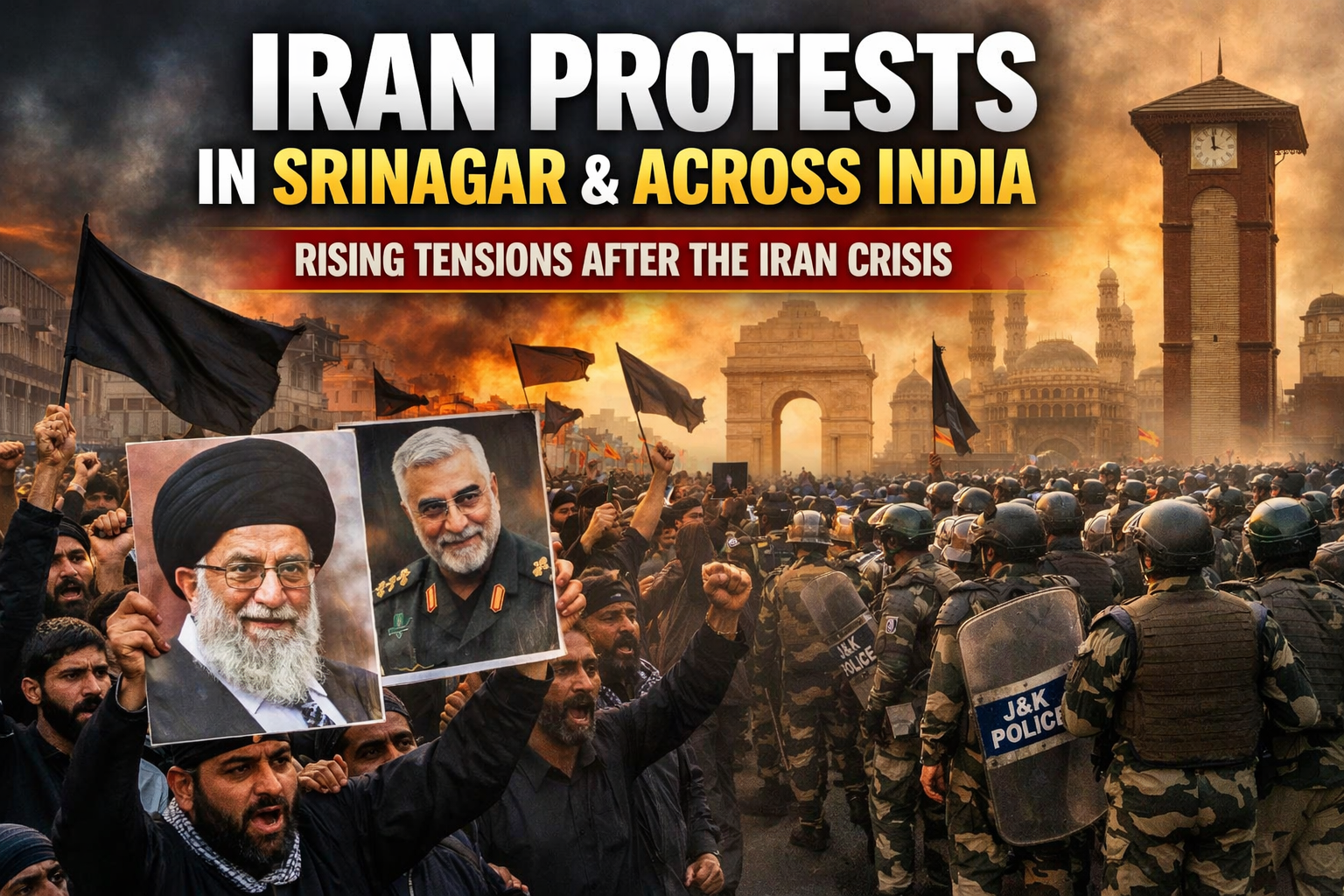
On the weekend following reports of a deadly strike on Iran’s leadership, large demonstrations erupted in parts of northern India — most visibly in and around Srinagar. What began as mourning processions in Shia neighbourhoods quickly became political demonstrations: crowds gathered at Lal Chowk and other public squares, carried black flags and portraits, chanted slogans against foreign powers, and attempted to march toward symbolic sites such as the UN observers’ office. Local authorities responded by sealing off key squares, curtailing movement, and restricting mobile internet in several districts as a precaution.
Why Srinagar Reacted Strongly
Srinagar’s protests combined grief, religious solidarity, and longstanding regional grievances. Many participants framed their presence as religious mourning for Ayatollah Ali Khamenei while also voicing anger at the perceived foreign actors behind the strike. Because Kashmir has a visible Shia population in certain pockets and a political culture that often turns outward at regional events, the killing quickly became a flashpoint that mobilised youth, religious leaders, and civil-society groups. Reports from local journalists and video circulating on social media showed packed processions and, at times, tense clashes when authorities tried to stop marches.
Spread to Other Indian Cities and States
The unrest did not remain confined to the Kashmir Valley. Demonstrations, mourning rallies, and small marches were reported in major cities including Delhi, Hyderabad, and Lucknow, along with smaller gatherings in Ladakh and pockets of western India. In the capital region, imams and community leaders organised peaceful vigils that later gave voice to anti-US and anti-Israel slogans; in some places, police dispersed crowds with tear gas to prevent marches toward diplomatic missions or sensitive installations. Authorities in several states tightened security near consulates and diplomatic compounds to preempt any escalation.
Security Response and Restrictions
Faced with large gatherings and the risk of the demonstrations spilling into violent confrontations, government agencies adopted a layered response: sealing off protest hubs, deploying additional police and paramilitary units, imposing temporary curbs on public assembly, and throttling or suspending mobile internet services in affected districts. The move to restrict internet services mirrored the playbook the local administration has used in past periods of unrest — intended to slow mobilisation and limit the spread of inflammatory images and video, but criticised by rights groups for affecting ordinary life and communications. News outlets documented both peaceful vigils and episodes in which police used crowd-control measures to disperse protesters.
What’s Driving Public Sentiment
Three overlapping factors explain why events in the Middle East produced a strong local reaction in India. Religious solidarity played a central role, as many mourners viewed the death of a senior Shia figure as a deeply emotional and spiritual event requiring public observance. Regional geopolitics also shaped reactions, with the strike feeding into narratives about global power politics and perceived injustice. Local politics and identity further intensified the response, as foreign policy flashpoints in Kashmir often intersect with longstanding regional grievances and mobilisation networks.
Nature of the Protests: Peaceful Mourning vs. Clashes
Most demonstrations began as mourning processions or peaceful vigils — chanting religious hymns, holding portraits and banners, and reading elegies. However, when attempts were made to convert processions into marches toward strategic locations such as Lal Chowk or UN sites, law-enforcement interventions sometimes escalated into clashes. In several reports, police used tear gas and barricades, while in other instances protesters dispersed peacefully after prayers. Authorities cited concerns about law and order and the protection of public property.
Broader Regional Fallout
The emotional response in India reflected a wider regional pattern. Neighbouring Pakistan saw more intense and sometimes violent protests that led to curfews and heightened security measures. These cross-border reactions highlight the diplomatic and security implications of a strike on a major regional leader. For India, while the demonstrations remained largely contained, they contributed to a sensitive regional security atmosphere requiring careful diplomatic and administrative coordination.
Media, Misinformation, and Social Platforms
Social media amplified footage of processions, clashes, and slogans, but it also circulated unverified claims and emotionally charged narratives. To curb the rapid spread of potentially inflammatory content, authorities restricted internet access in some districts. While such steps can limit mobilisation, they also raise concerns about transparency and communication. Independent reporting and cross-verification by media outlets played an important role in clarifying developments on the ground.
What Happens Next?
In the short term, continued mourning rituals and smaller demonstrations are expected, alongside heightened security at sensitive locations. Authorities are likely to maintain preventive measures while monitoring for any escalation. Diplomatic balancing will remain crucial as India navigates domestic sentiment and broader geopolitical considerations.
Conclusion
The protests in Srinagar and other Indian cities underscore how international developments can quickly resonate at the local level, blending religion, identity, and politics. While many gatherings began as expressions of grief, they evolved into broader political demonstrations. The coming days will test the balance between safeguarding public order and preserving space for peaceful expression.