Will Fuel Prices Rise in India Due to Iran War? Oil Market Analysis – March 2026
Claim Being Reviewed
"As of 6 March 2026, petrol and diesel prices in India have not increased despite tensions involving Iran in the Middle East. India imports more than 80% of its crude oil, and global oil prices often react to geopolitical conflicts in the Gulf region, especially around the Strait of Hormuz, a key global oil shipping route. Crude prices have shown volatility due to the conflict, but there has been no official announcement of a fuel price hike in India. Any future increase will depend on how the conflict develops and its impact on global oil supply."
Will Fuel Prices Rise in India Due to the Iran War?
The ongoing conflict involving Iran in the Middle East has raised serious concerns about global energy markets. Oil is one of the most geopolitically sensitive commodities, and any military tension in the Gulf region can quickly impact global crude oil prices. For India, which imports a large portion of its oil, such conflicts can influence petrol, diesel, and LPG prices. This article analyzes the current situation as of 6 March 2026 and whether fuel prices in India may increase in the coming weeks.
Current Fuel Prices in India (6 March 2026)
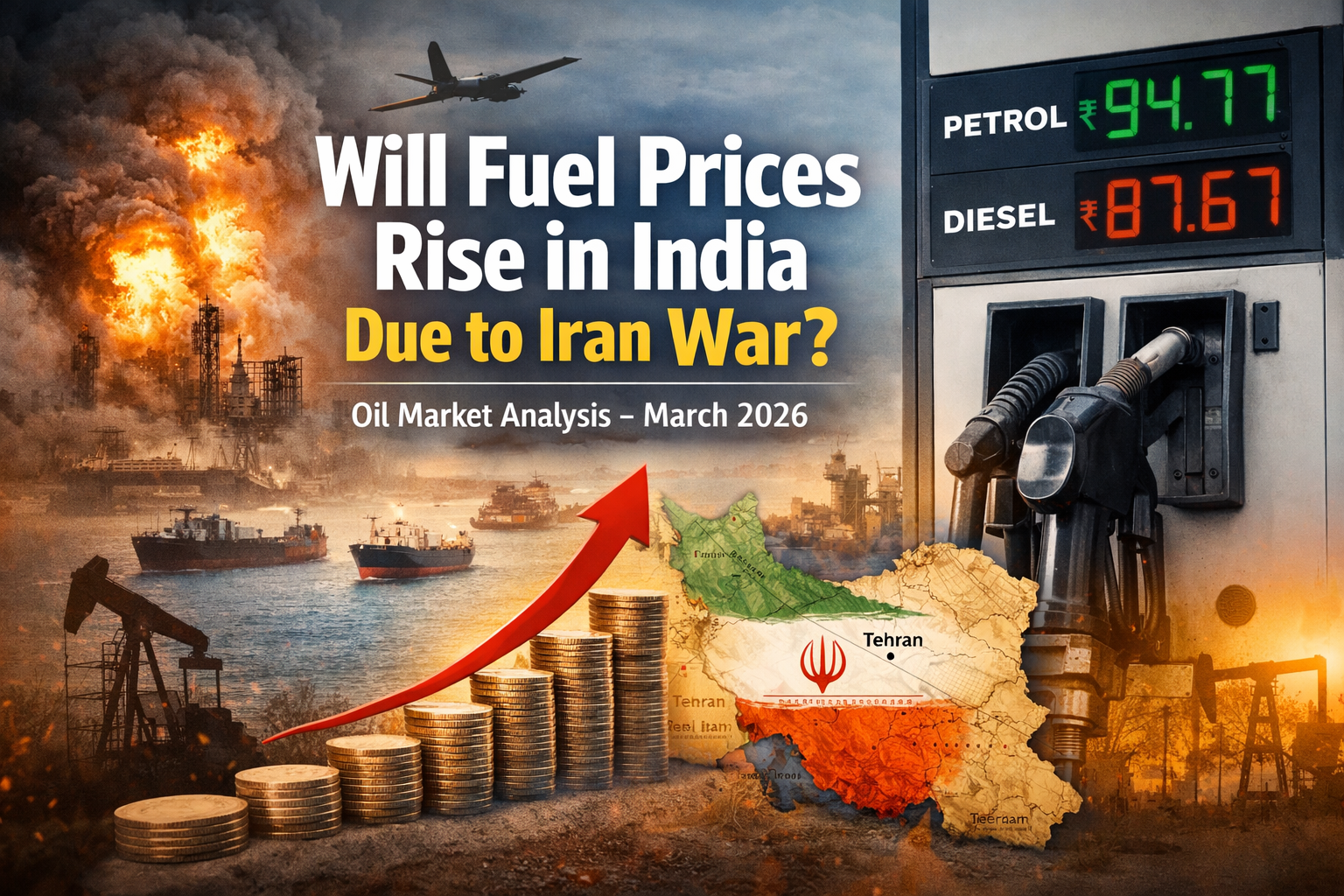
As of 6 March 2026, petrol and diesel prices in India have not increased despite volatility in global crude oil markets. In Delhi, petrol is priced at around ₹94.77 per litre and diesel at ₹87.67 per litre. In Mumbai, petrol costs around ₹103.49 per litre while diesel is approximately ₹90.03 per litre. Oil marketing companies have kept prices stable even as global crude oil prices have started rising due to tensions in the Middle East.
Why the Iran War Is Affecting Oil Prices
The Middle East plays a crucial role in the global oil supply chain. When geopolitical conflicts occur in this region, oil markets react immediately due to fears of supply disruptions. Investors and traders closely monitor the situation, and even small disruptions can push oil prices higher.
One major concern is the Strait of Hormuz, one of the world’s most important oil shipping routes. Nearly 20 percent of global oil passes through this narrow waterway. Any military activity or shipping disruptions in this region can significantly affect global oil availability and prices.
Recent military tensions, drone attacks, and security concerns in the region have increased uncertainty in the oil market. As a result, global crude oil prices have been moving upward, with Brent crude approaching around $80 per barrel.
Why India Is Vulnerable to Rising Oil Prices
India is one of the largest oil-importing countries in the world and relies heavily on foreign suppliers for its crude oil needs. More than 80 percent of India's crude oil demand is met through imports. Because of this dependency, fluctuations in global oil prices directly affect the Indian economy.
If global crude oil prices increase significantly, India may face a higher import bill, pressure on the rupee, and rising inflation. Increased fuel costs can also impact transportation, logistics, and the prices of essential goods across the country.
Will Petrol and Diesel Prices Increase Soon?
At the moment, fuel prices in India remain stable. However, analysts believe that the risk of price increases could grow if the conflict in the Middle East escalates further. Oil marketing companies often delay immediate price changes to avoid sudden shocks for consumers.
If crude oil prices rise beyond $90 or $100 per barrel and remain elevated for a sustained period, petrol and diesel prices in India may eventually increase. The government could also intervene by adjusting taxes or taking other measures to control the impact on consumers.
Government Measures to Manage the Situation
The Indian government is closely monitoring developments in the Middle East and preparing for potential disruptions in energy supply. Authorities have reportedly asked domestic refineries to increase LPG production and review fuel supply chains to avoid shortages.
India is also exploring alternative oil suppliers and maintaining strategic reserves to ensure that the country can manage supply shocks if the conflict continues or worsens.
Economic Impact Beyond Fuel Prices
The consequences of rising oil prices extend beyond petrol and diesel costs. Higher fuel prices can increase transportation expenses, airline ticket prices, and logistics costs for businesses. These factors can eventually lead to higher prices for everyday goods and services.
Economists believe that while inflation may rise slightly, the larger impact could be on economic growth if the conflict disrupts global trade and energy markets for an extended period.
Conclusion
As of 6 March 2026, petrol and diesel prices in India remain unchanged despite rising global oil prices due to tensions involving Iran. However, the situation remains uncertain and could change depending on how the conflict develops. If the war escalates or disrupts oil supply routes, fuel prices in India could increase in the coming weeks. For now, the government and oil companies appear to be maintaining stability while closely monitoring global developments.
Frequently Asked Questions (FAQ)
Will petrol and diesel prices increase in India because of the Iran war?
As of 6 March 2026, fuel prices in India have not increased. However, if global crude oil prices continue rising due to Middle East tensions, petrol and diesel prices in India may increase in the coming weeks.
Why does the Iran conflict affect global oil prices?
The Middle East produces a large portion of the world’s oil. Conflicts in this region create fears of supply disruptions, especially around important shipping routes like the Strait of Hormuz, which can push global crude oil prices higher.
How much oil does India import from other countries?
India imports more than 80 percent of its crude oil from other countries. Because of this heavy dependence, any increase in global crude oil prices can directly affect fuel prices and the overall economy.
What crude oil price could trigger fuel price hikes in India?
Analysts believe that if global crude oil prices rise above $90–$100 per barrel and remain high for a long time, petrol and diesel prices in India could increase unless the government adjusts taxes.
What steps is the Indian government taking to control fuel prices?
The government is monitoring the global oil market, increasing domestic fuel production, and exploring alternative oil suppliers. Strategic reserves may also be used if supply disruptions occur due to the conflict.