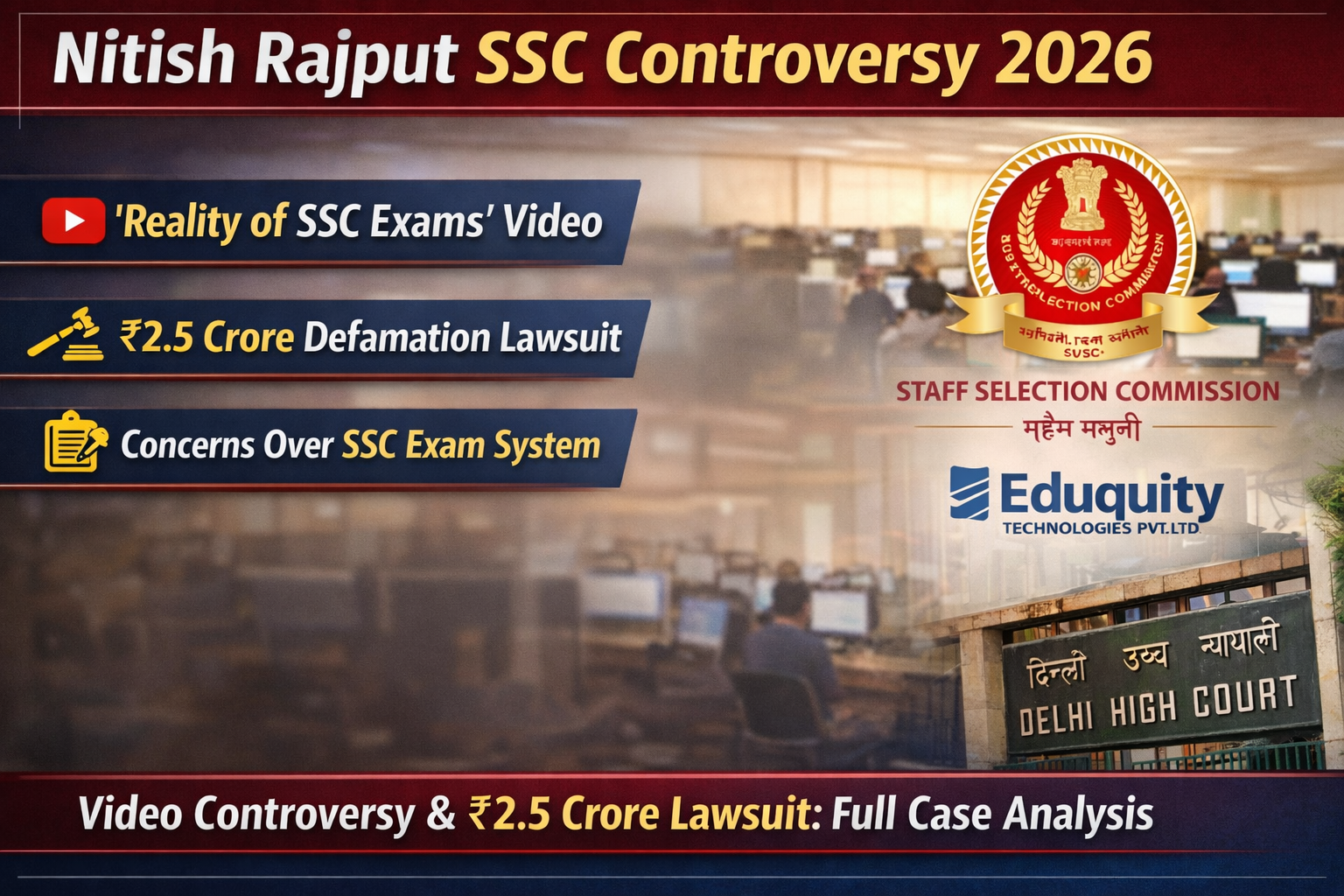
Nitish Rajput SSC Controversy 2026: Full Analysis of Video, ₹2.5 Crore Lawsuit & Exam System Debate
Quick Summary
In 2026, YouTuber Nitish Rajput faced a ₹2.5 crore defamation lawsuit after his video “Reality of SSC Exams” questioned structural issues in the SSC examination system. This article provides a neutral, detailed overview of the video’s claims, Eduquity Technologies' legal action, public reactions, and the broader debate surrounding exam outsourcing and accountability.
The Nitish Rajput SSC Controversy: A Non-Biased Examination of the Video, Lawsuit, and Larger Issues
Nitish Rajput, a popular Indian YouTuber known for research-oriented videos on governance and public systems, became the center of controversy in early 2026 after his video titled "Reality of SSC Exams" went viral. Following the video's massive reach, Eduquity Technologies Pvt. Ltd. filed a ₹2.5 crore defamation lawsuit in a Delhi court. This article presents a factual, balanced overview based on publicly available information.
Who is Nitish Rajput?
Nitish Rajput was born on October 4, 1989, in Sultanpur, Uttar Pradesh. He later lived in Uttarakhand and moved to Delhi. He holds a B.Tech degree from Gautam Buddha University. Over the years, he built a strong audience on YouTube through long-form explanatory videos on complex social and governance topics.
His content typically references RTI replies, official documents, public tenders, and historical data — attracting a large number of SSC and UPSC aspirants.
The Video: "Reality of SSC Exams"
Uploaded around September 11, 2025, the video examined the Staff Selection Commission (SSC) examination system and its transition to computer-based testing. The analysis focused on structural and procedural issues rather than personal accusations.
- History of SSC since its establishment in 1975
- Shift to Computer-Based Tests (CBT) in 2016
- Changes in vendor selection and outsourcing model
- Tender process modifications and eligibility criteria
- Concerns about subcontracting and low bidding practices
The video also highlighted candidate-reported issues during SSC Phase-13 (2025), including distant exam centers, server crashes, biometric mismatches, and logistical hardships faced by aspirants.
Eduquity Technologies' Defamation Lawsuit
In February 2026, Eduquity Technologies Pvt. Ltd., a company involved in SSC exam conduction, filed a ₹2.5 crore defamation suit in a Delhi court. The company claims that the video contains misleading representations that harmed its professional reputation and business interests.
They have reportedly sought financial compensation and removal of the video. Nitish Rajput has declined to remove the video, maintaining that his content is based on publicly available documents and RTI data.
Public and Aspirant Reactions
The controversy triggered strong reactions from SSC aspirants and student communities. Many praised the video for highlighting long-standing grievances related to exam infrastructure and management.
Others emphasized the importance of careful presentation of official documents, arguing that selective interpretation may create confusion. The debate has sparked discussions about free speech, accountability, and the responsibilities of digital content creators.
Broader Context: Challenges in SSC Examinations
- Technical failures during computer-based exams
- Logistical issues like distant exam centers
- Frequent pattern and schedule changes
- Concerns about outsourcing large-scale examinations
These challenges have previously led to protests and court petitions. Rajput’s video placed these issues within a structural and historical framework.
Current Status and Implications
As of February 2026, the case remains ongoing in the Delhi court. The outcome may influence how defamation laws apply to digital commentary on public-private partnerships and government-contracted services.
Final Thoughts
The Nitish Rajput SSC controversy reflects broader tensions within India’s competitive examination ecosystem. While supporters view the video as public-interest scrutiny, the company involved considers it reputational harm. The legal process will determine the outcome, while public discourse may influence future reforms.