Trump Imposes 25% Tariff on Countries Doing Business With Iran
Quick Summary
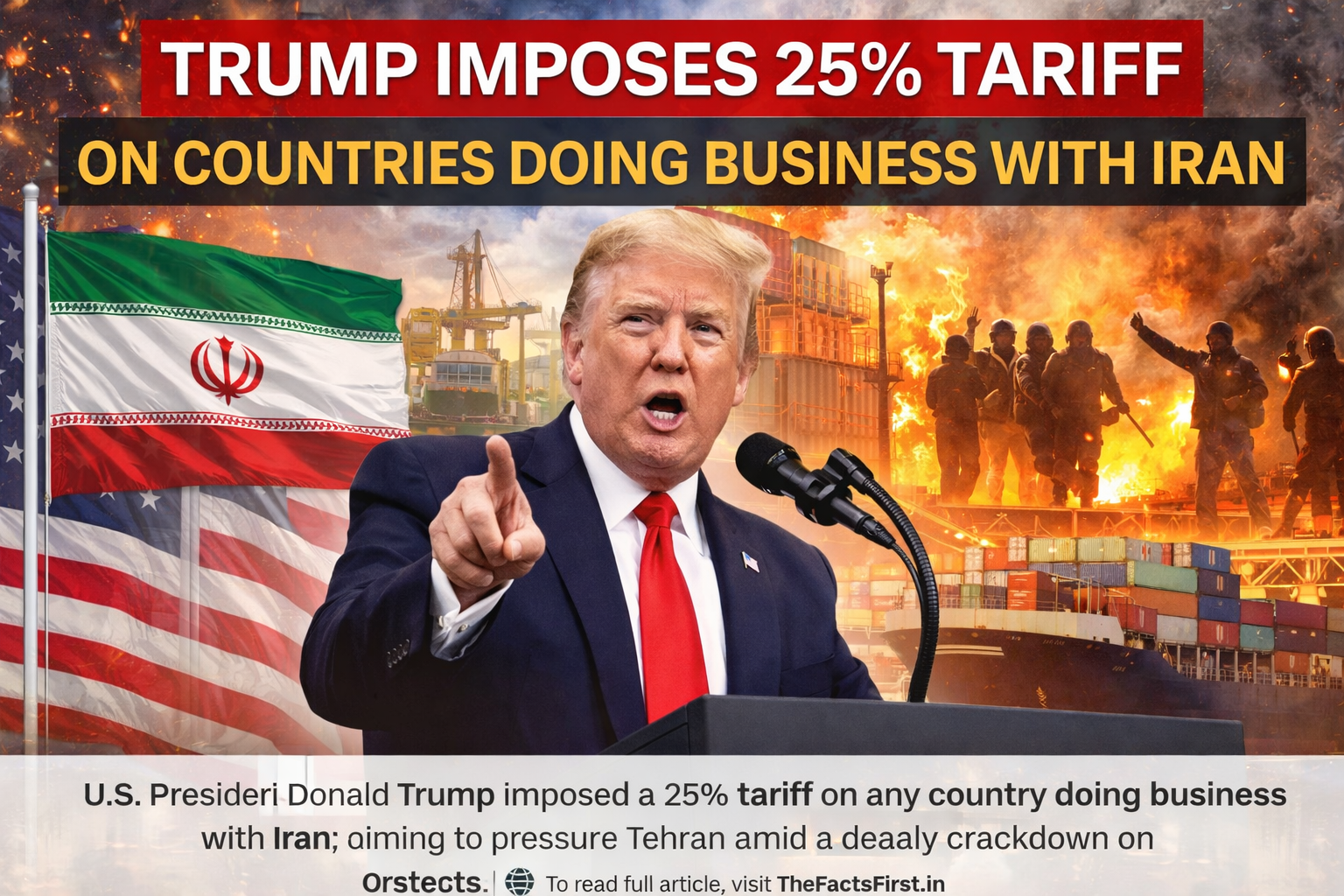
Donald Trump has imposed a 25% tariff on countries trading with Iran to increase pressure on Tehran following a violent crackdown on anti-government protests that reportedly killed nearly 600 people.
Trump Imposes 25% Tariff on Countries Doing Business With Iran
U.S. President Donald Trump imposed a 25% tariff on any country doing business with Iran, aiming to increase economic pressure on Tehran amid a harsh crackdown on widespread protests that has resulted in nearly 600 deaths, according to multiple rights reports.
The announcement was made via Trump's social media post on Truth Social and labeled as "final and conclusive," with penalties imposed immediately on U.S. commerce with any country that continues to do business with Iran.
Increasing Economic Pressure
Trump's decision increases economic pressure on Iran and its business partners as the country experiences one of the greatest protest movements in decades. The United States has historically used tariffs and sanctions as foreign policy instruments; this latest step expands on that approach by targeting not just Tehran but also third-party countries that do business with the Islamic Republic.
Iran's major trading partners, including China, India, the United Arab Emirates, Turkey, and Russia, may be affected. Analysts believe the increased tax will complicate diplomatic and commercial relations, particularly with nations that have strong economic ties to both Tehran and Washington.
Protests and Human Rights Context
The tariff move comes amid significant protests in Iran, which began in late 2025 and have extended to major cities and regions. According to rights groups, almost 600 people have been murdered in conflicts between demonstrators and security forces, however exact figures vary due to the authorities' restrictions on communication channels and internet access.
The protests, which began with economic complaints, have grown to include broader calls for political reform. Iranian authorities have responded with force, garnering worldwide censure and leading Washington to contemplate a variety of options, ranging from economic sanctions to diplomatic engagement.
Global and Legal Implications
While Trump has framed the tariff as a crucial step toward holding Tehran accountable, it also poses legal and strategic concerns. There is no publicly available formal documentation defining the legal basis for applying such tariffs, and the United States Supreme Court is currently evaluating the scope of presidential tariff authority based on earlier decisions.
The approach may also elicit diplomatic opposition from impacted countries, some of whom may perceive the tariffs as an overreach of U.S. economic power. India, China, and other countries with major trading ties to Iran may confront difficult choices in balancing their economic interests with the potential of increased tariffs on U.S. commerce.
What Comes Next?
The Trump administration has presented the levies as part of a larger campaign to put pressure on Iran's leadership to end the crackdown and engage in potential negotiations. Officials continue to indicate that military alternatives are still on the table, albeit negotiation is still regarded as the preferred starting point.
The latest tariff order could have far-reaching consequences for global markets, geopolitical alliances, and international trade patterns, particularly if major economies opt to oppose or seek exemptions. Diplomatic activity is expected to increase in the coming days as countries respond to Washington's most recent economic strategy.
Sources
Reuters – Trump says countries doing business with Iran face 25% tariff
NDTV – Trump slaps 25% tariffs on nations doing trade with Iran
The Economic Times – Trump announces 25% tariffs on countries doing business with Iran