Was the Killing of Iran’s Supreme Leader Justified? Legal, Ethical and Global Impact Analysis
Claim Being Reviewed
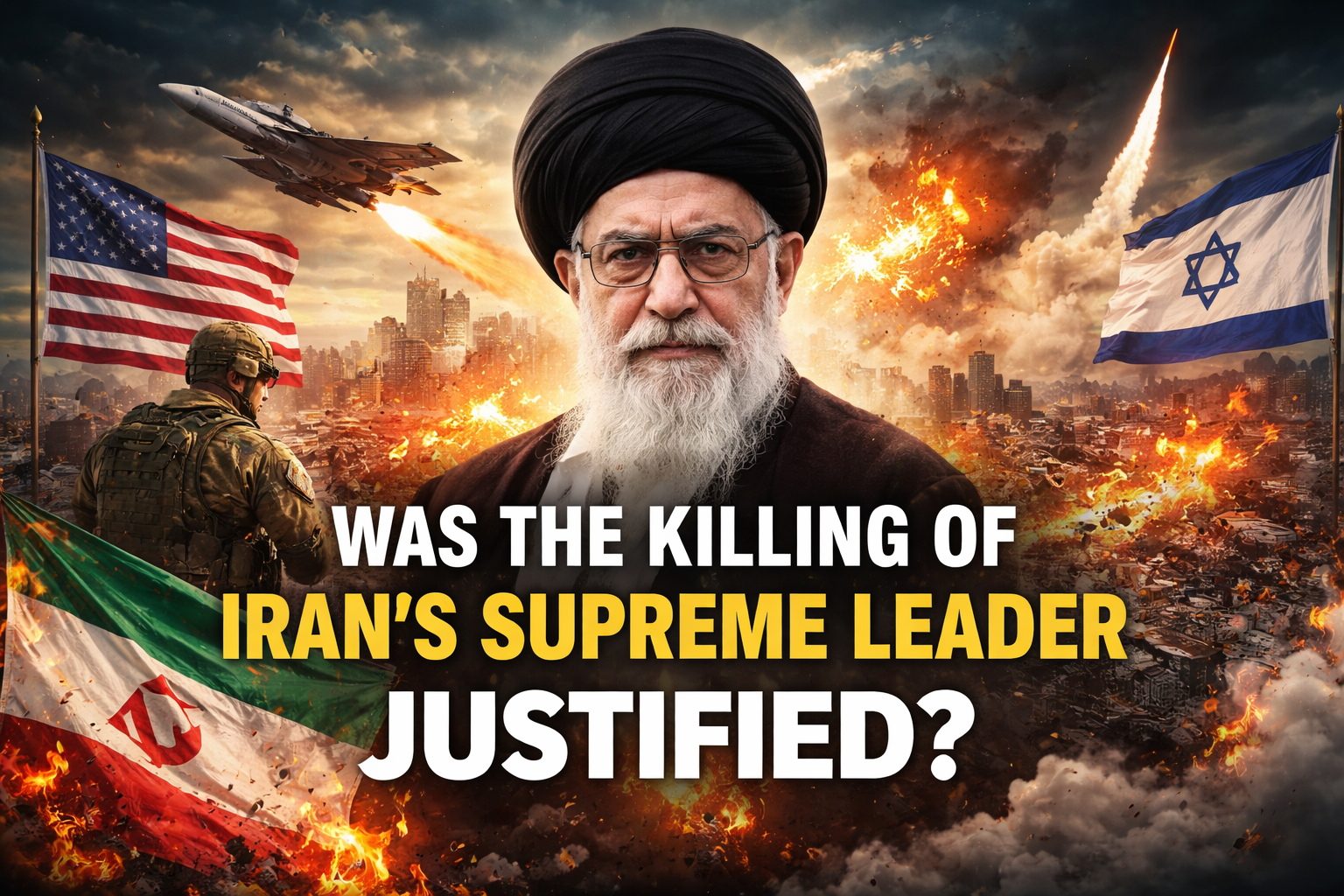
"Reports indicate that Iran’s Supreme Leader was killed during coordinated military strikes targeting Iranian leadership and strategic facilities. While some governments justified the operation under self-defense claims, international reactions remain divided, and no global legal authority has issued a final ruling on its legality. The situation is still developing, with geopolitical consequences expected to unfold over time."
Was the Killing of Iran’s Supreme Leader Justified? A Legal, Ethical, and Global Perspective
The reported killing of Iran’s Supreme Leader in a joint United States–Israel military strike has sparked global debate. Governments, analysts, and citizens are questioning whether the action was justified or whether it crossed legal and ethical boundaries in international relations. This article examines the issue through legal, historical, ethical, and geopolitical perspectives.
Background: A Turning Point in Global Politics
The Supreme Leader of Iran holds ultimate authority over political, military, and religious matters. Any attack targeting such a figure represents more than a military operation; it becomes a geopolitical event capable of reshaping international relations. Supporters argue the strike removed a major threat, while critics believe it risks destabilizing global order.
International Law and Legitimacy
International law generally prohibits countries from using force against another sovereign state. The United Nations Charter emphasizes respect for territorial integrity and political independence. Exceptions exist only under self-defense or when authorized by the UN Security Council. Debate continues over whether the strike met these legal standards.
Supporters claim the action was preventive self-defense against security threats, while critics argue that preemptive attacks weaken international legal norms. Without a formal international ruling, legality remains contested.
Ethical Debate: Security vs Sovereignty
Ethically, the issue centers on whether eliminating a leader can be justified if it potentially prevents future violence. Some argue that removing powerful figures responsible for aggressive policies may save lives. Others warn that political assassinations undermine diplomacy and normalize military solutions over peaceful negotiation.
Historical Lessons from Similar Events
History shows mixed outcomes following leadership removals. The fall of Saddam Hussein led to prolonged instability in Iraq, while Libya experienced political fragmentation after Muammar Gaddafi’s death. In contrast, the killing of Osama bin Laden was widely accepted internationally because he led a non-state terrorist organization rather than a sovereign nation.
These examples demonstrate that removing a leader does not automatically produce peace. Political systems, institutions, and regional conditions determine long-term outcomes.
Strategic Arguments Supporting the Strike
Strategically, supporters believe decisive military action strengthens deterrence by signaling consequences for perceived threats. Targeting leadership may disrupt command structures and reduce operational coordination. However, such strategies carry risks if they provoke retaliation instead of deterrence.
Risks of Escalation and Retaliation
The killing of a national leader often generates strong emotional and political reactions. Governments may respond militarily to maintain credibility among citizens and allies. Retaliation can occur through direct attacks, cyber warfare, proxy conflicts, or economic disruption, increasing the likelihood of broader regional conflict.
Impact on Global Stability
The long-term impact depends on how other nations interpret the event. If leadership targeting becomes normalized, international norms may weaken. Conversely, some analysts believe decisive actions may push adversaries toward negotiations. The outcome remains uncertain and will unfold over time.
The Human Dimension
Beyond politics, civilians often face the greatest consequences. Economic instability, rising energy prices, and disrupted trade can affect global populations. Political decisions at the highest levels frequently translate into everyday challenges for ordinary people worldwide.
What Happens Next?
Analysts will evaluate whether violence decreases, diplomacy resumes, or instability increases. The true consequences of such actions typically emerge over years rather than months, making immediate judgments difficult.
Conclusion
Whether the killing was justified remains deeply controversial. Legal interpretations differ, ethical perspectives clash, and strategic outcomes remain uncertain. Ultimately, history will determine whether the action contributed to long-term stability or intensified global tensions.
Frequently Asked Questions (FAQ)
Was the strike legal under international law?
The legality is disputed. Some argue it qualifies as self-defense, while others believe it violates international law protecting national sovereignty.
Do leadership killings usually end conflicts?
Historical evidence shows mixed results. In many cases, removing leaders creates instability rather than immediate peace.
Why is targeting a head of state controversial?
Heads of state represent national sovereignty. Attacking them can escalate conflicts and challenge established international norms.
What could happen next globally?
Possible outcomes include diplomatic negotiations, regional escalation, economic impacts, or shifts in global alliances depending on political responses.