USA vs Iran Military Power Comparison and Nuclear Capabilities
Quick Summary
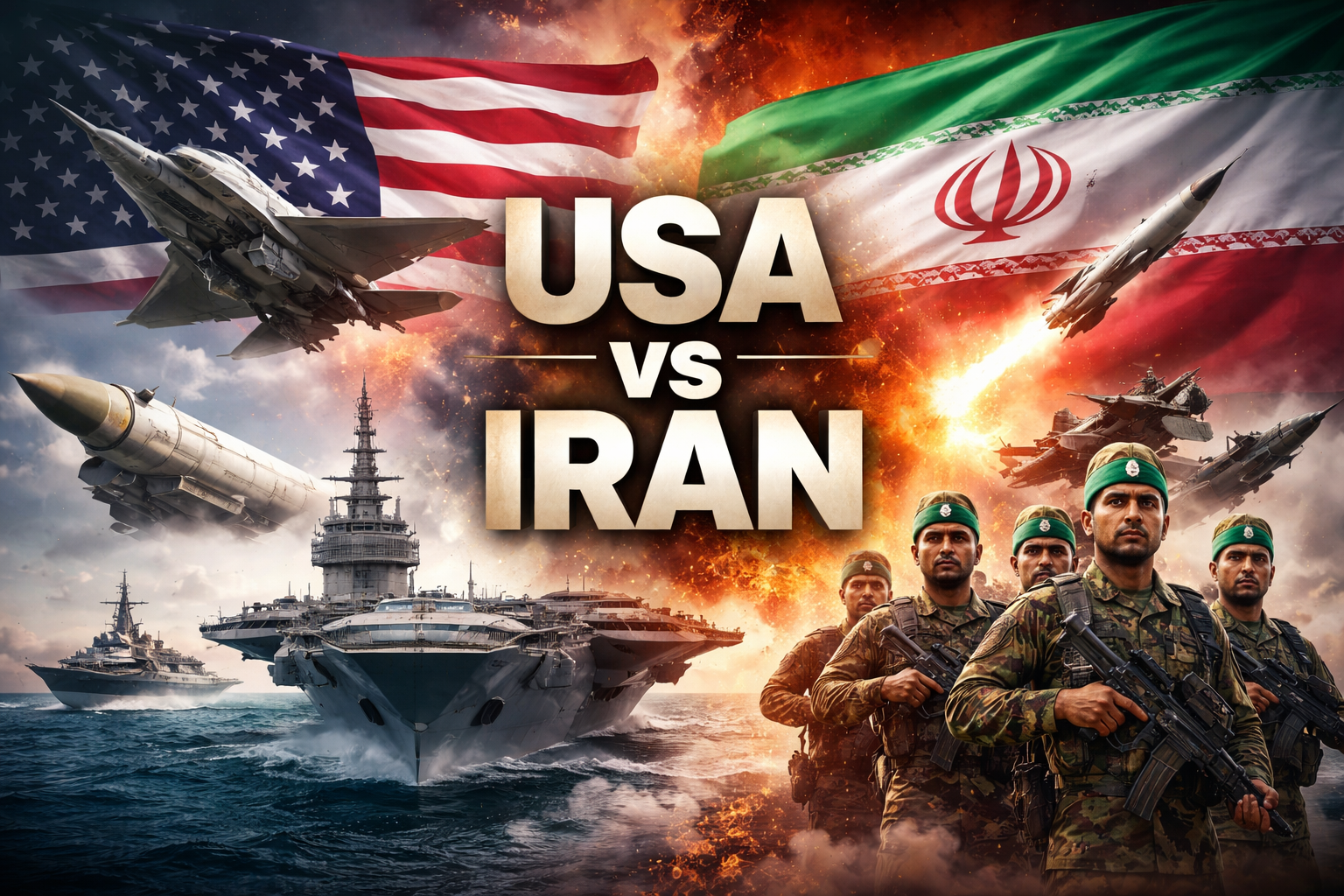
This article provides a clear comparison between the USA and Iran’s military strength, including defense budgets, air power, naval capability, asymmetric warfare, and nuclear status. It also explains who would likely win under different conflict scenarios.
US vs Iran Military Comparison and Nuclear Power Report
This paper discusses the military comparison between the United States of America (USA) and Iran. It also covers who is most likely to win in various conflict scenarios, as well as nuclear power status. The information is written in basic language and organized for SEO purposes.
Definition of "Who Will Win" in a War
Winning a battle does not always imply total devastation of the adversary. It is determined by the conflict's objectives, which may include air strikes, regional domination, regime change, or political pressure.
- Short-term air or missile strikes.
- Long-term occupation, regime transition
- Economic and political pressure.
- Regional stability or instability?
Military Budget and Economic Strength
The United States has the greatest military budget in the world. It spends hundreds of billions of dollars annually on defense, technology, training, and global bases. Iran's military budget is significantly lower due to international sanctions and economic constraints.
- The US defense spending exceeds $800 billion annually.
- Iran's defense budget is under $10 billion annually.
- The United States can endure extended wars.
- Iran emphasizes cost-effective weapons.
Military Personnel Comparison
Both countries have substantial armed forces, but they are structured and trained differently. The United States relies on innovative technology and cooperative activities. Iran relies on manpower and home field advantage.
- US total force: millions (active plus reserve)
- Iran active personnel: around 610,000.
- Iran possesses significant reserve and paramilitary troops.
AirPower and Technology
Air power is one of the most significant advantages for the United States. The United States has stealth planes, drones, satellites, and precision weapons. Iran possesses aging planes but powerful air defense and missile systems.
- The USA has stealth fighters and bombers.
- Iran utilizes missiles, drones, and air defense systems.
- The USA most certainly controls the airspace.
Naval Power and the Strait of Hormuz
The Strait of Hormuz is a major oil transportation route. The United States possesses a formidable fleet capable of worldwide operations. Iran employs local naval tactics to prevent trade.
- US aircraft carriers and submarines
- Iran's speed boats and naval mines
- Even little disruptions can effect global energy prices.
Asymmetric Warfare and Proxies
Iran employs asymmetric warfare rather than direct combat. This includes missiles, drones, cyberattacks, and regional allied groups. This tactic boosts pressure without involving a full-scale battle.
- Ballistic and cruise missiles.
- Drone attacks.
- Regional proxy groups.
Nuclear Power Comparison
The Nuclear Non-Proliferation Treaty (NPT) recognizes the United States as a nuclear weapons state. It maintains a nuclear triad as a deterrent. Iran does not officially possess nuclear weapons.
- The USA possesses around 5,000 nuclear warheads (including reserve).
- US nuclear triad: land, sea, and air
- Iran does not officially have nuclear weapons.
- Iran enriches uranium up to 60 percent.
Possible War Scenarios
diverse war scenarios have diverse consequences. Military victories do not automatically imply political triumph.
- Limited conflict: USA has a military advantage.
- The regional battle has no obvious winner.
- Full invasion: tremendous expense, long-term instability.
Final Verdict
A direct conventional military battle would most likely end in victory for the United States. However, Iran's actions have the potential to cause long-term regional instability and economic devastation. Deterrence prevents nuclear escalation, which would be catastrophic for both sides.
Sources
- SIPRI Military Expenditure Database: https://www.sipri.org/databases/milex
- Reuters – US Defense Budget: https://www.reuters.com/world/us/
- International Institute for Strategic Studies (IISS): https://www.iiss.org
- Federation of American Scientists – Nuclear Forces: https://fas.org/issues/nuclear-weapons/status-world-nuclear-forces/
- International Atomic Energy Agency (IAEA): https://www.iaea.org
- Nuclear Non-Proliferation Treaty (NPT): https://www.un.org/disarmament/wmd/nuclear/npt/
About Ajay Kumar Singh
Fact-checker and editorial contributor at The Facts First.
View all articles →