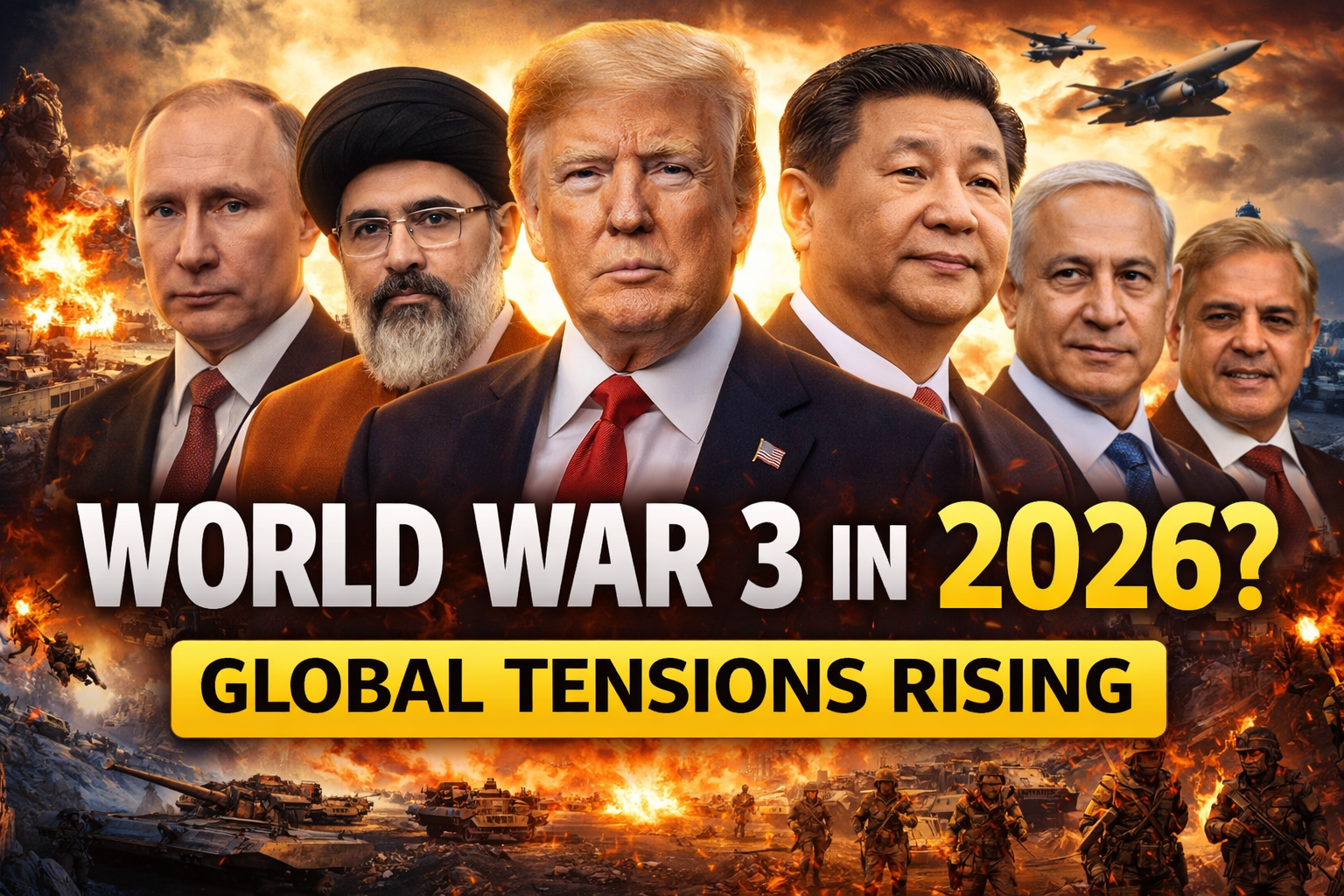
Will World War 3 Happen in 2026? A Sobering Global Risk Analysis
Claim Being Reviewed
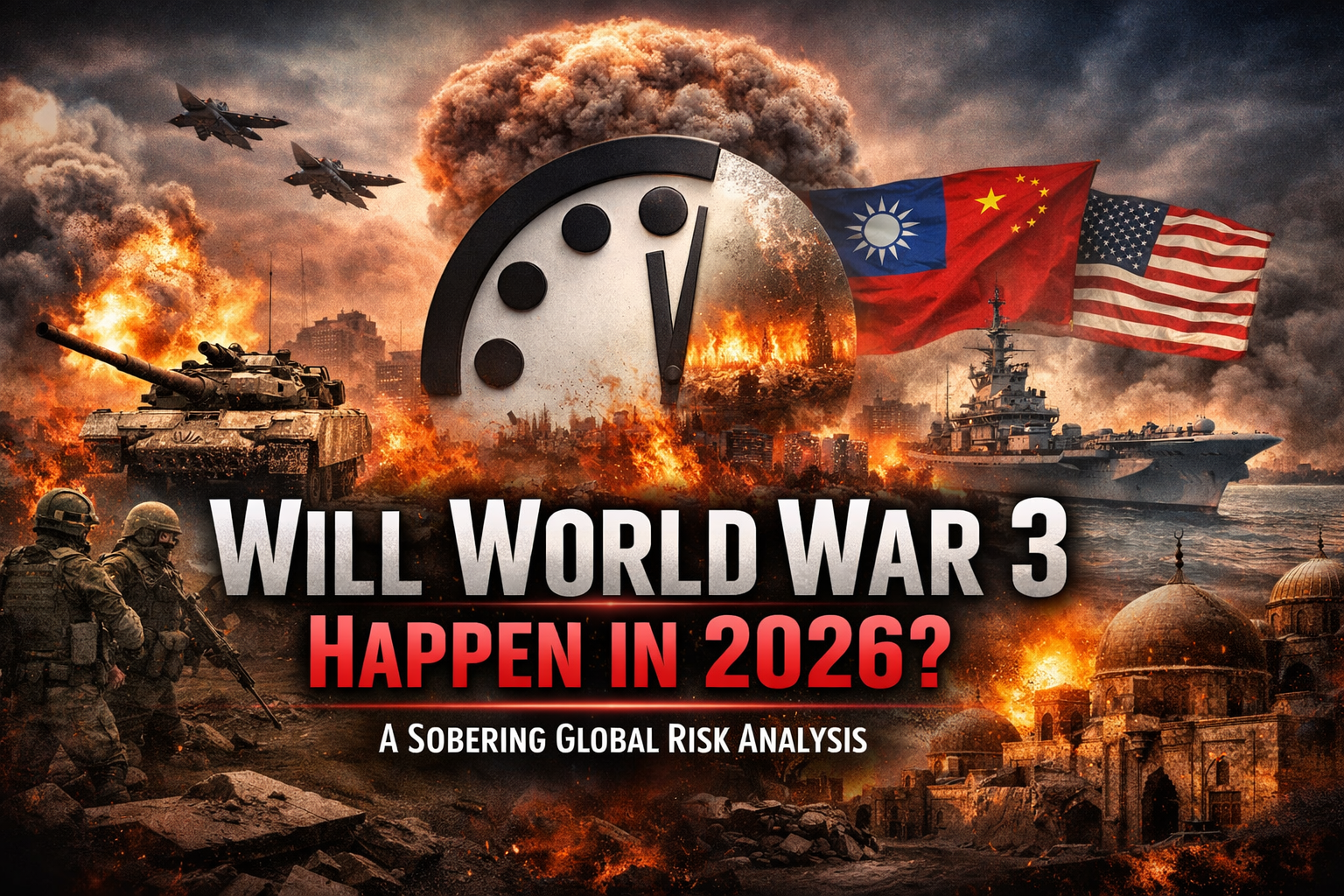
"In 2026, the Doomsday Clock stands at 85 seconds to midnight (closest ever), and global flashpoints (Russia-Ukraine, China-Taiwan, Middle East) make World War 3 possible or a realistic risk this year, per expert analyses and polls showing public belief in near-term major war."
Could World War 3 Happen in 2026? A Sobering Analysis
As the Munich Security Conference kicks off this week under the ominous banner "Under Destruction", the world feels like it's teetering on a precipice. The Bulletin of the Atomic Scientists just set the Doomsday Clock to 85 seconds to midnight—the closest it's ever been. Polls across the US, UK, France, and Canada show a majority now believe a new world war is "likely" within five years. And yet, here we are in mid-February 2026, with no all-out global conflict... yet.
Is 2026 the year it finally ignites? Or are we witnessing the messy birth of a new, multipolar order rather than Armageddon? Let's break it down, based on the latest developments from Ukraine to the Taiwan Strait, the Trump administration's deal-making foreign policy, and expert assessments from think tanks like the Stimson Center, CFR, and the World Economic Forum.
The Flashpoints: Where Sparks Could Fly
1. Russia-Ukraine: The Grinding Meat Grinder That Won't End
The war that refuses to freeze. As of this week, Russian forces are pressing advances in Donbas, resuming massive drone and missile strikes on Ukrainian energy grids after a brief "moratorium." Peace talks? Stalled. At Munich, US Secretary of State Marco Rubio is reportedly pushing a "free economic zone" buffer in Donbas—something Zelenskyy is floating via referendum but Russia rejects outright.
Risk level: High for escalation, medium for global spillover.
Russia has explicitly warned that Western security guarantees for Ukraine (troops, long-range weapons) could trigger "direct conflict between nuclear powers." NATO is ramping up—Europe's defense spending is surging—but Trump's "America First" has made US commitment wobbly. A miscalculation, like a Russian strike on a NATO border (think those Polish drone incidents), could drag everyone in.
Probability of direct NATO-Russia clash in 2026: 20-30% (per CFR's Conflicts to Watch).
2. China-Taiwan: The Big One Lurking in the Shadows
Xi Jinping just told Trump in a February call that Taiwan is "the most important issue" and to be "prudent" on arms sales. China continues quarterly live-fire drills around the island. Meanwhile, the US National Defense Strategy 2026 prioritizes "denial defense" along the First Island Chain but notably doesn't mention Taiwan by name.
Trump's approach? Strategic ambiguity on steroids—pausing some aid during trade talks, but keeping the $11 billion arms pipeline open. Beijing is hedging: cozying up to Europe on tariffs while probing US resolve.
Risk level: Elevated but contained—for now.
A full invasion remains a 2027+ scenario for most analysts (Stimson Center, WEF Global Risks Report). But gray-zone coercion (blockades, cyber) could spiral if Trump-Xi summits (four planned this year) collapse.
WW3 trigger potential: If China moves, the US gets pulled in via allies like Japan and Australia. 15-25% chance of major crisis.
3. Middle East: Fragile Ceasefires and Proxy Fires
Gaza's ceasefire is holding—barely—but underlying issues (Hamas, settlements, reconstruction) are unresolved. Iran and Israel are in a shadow war: US-Iran talks to avert nuclear escalation are ongoing, but Tehran's proxies (Houthis, Hezbollah) keep probing. Israel's recognition of Somaliland adds a new layer of Horn of Africa tension, drawing in China and Russia.
Risk level: Medium.
No one's rushing to full war, but a US strike on Iranian assets or Israeli action against Iran's nuclear sites could ignite a regional blaze that sucks in superpowers.
4. Emerging Wildcards: Venezuela, North Korea, and Hybrid Mayhem
Venezuela: Trump's team is eyeing direct action against cartels, ranked as a top US risk by CFR.
North Korea: Nuclear tests could resume, pulling in Seoul and Tokyo.
Cyber & Hybrid: Russia and China are masters here—drones over Europe, AI attacks on infrastructure. The WEF calls geoeconomic confrontation the #1 crisis trigger for 2026.
Other notes from this week's headlines: Bangladesh's post-uprising election, Trump's climate deregulation (shifting energy alliances), and even bizarre side stories like the Canadian school shooting aren't helping the global mood.
What Makes WW3 More Likely in 2026?
Factor
Why It Matters
2026 Status
Eroding World Order
Trump's "transactional" deals are dismantling institutions (WTO, NATO commitments). Munich Report: "Pax Americana" is fracturing.
Accelerating
Nuclear Risks
Doomsday Clock at 85s. Russia/China stockpiling; Iran/Japan proliferation whispers.
Highest ever
Economic Weaponization
Tariffs, sanctions, chokepoints (Strait of Hormuz, Taiwan chips). WEF: Top risk for global crisis.
Surging
Public Sentiment
Polls: 43-46% in UK/US see WW3 by 2031. Fear breeds miscalculation.
Boiling
What Holds It Back?
Nuclear Deterrence: Mutually assured destruction still works. No one wants to be the first to go full apocalypse.
Economic Ties: China needs US markets; Europe needs stability. Trump's deals (e.g., with Xi) are pragmatic.
War Fatigue: Ukraine's attrition, Gaza's toll—leaders are exhausted.
Trump's Style: He's a dealmaker, not a warmonger. Focus is homeland/Western Hemisphere, not endless overseas crusades.
Expert consensus (Atlantic Council, IRC, Janes): 2026 is a "stress test" for multipolarity. 40% of foresight experts see a great-power war by 2035, but this year? More like regional flares than global inferno.
My Take: 2026 Could Be the Spark—But Not the Explosion
Could World War 3 happen in 2026? Technically yes. A black swan in the Taiwan Strait or a NATO-Russia border incident could cascade faster than anyone expects. The world is more dangerous than at any point since the Cold War's peak.
But probable? No. We're in an era of "managed chaos"—proxy wars, economic coercion, hybrid threats. Full WW3 requires coordinated great-power stupidity on a historic scale, and even Putin, Xi, and Trump seem wary of that.
The real story of 2026 might be Europe's awakening (Germany's €600B defense push), Asia's hedging, and whether Trump's "new rules" stabilize or shatter everything.
Bottom line: Stay vigilant. Stock the basics (no, not just memes). Support diplomacy. And remember: History rhymes, but it doesn't have to repeat.
What do you think—optimist or doomsayer? Drop your take in the comments.
Sources: Munich Security Report 2026, CFR Conflicts to Watch, Stimson Center Global Risks, WEF Global Risks Report, ISW assessments, and real-time reporting from Reuters, BBC, and others.